Aging in Place Readiness Guide
A practical, step-by-step guide to help you evaluate whether your current home and daily routine can support independent living as you age.
What “readiness” means
Aging in Place readiness is not perfection. It is the ability to live safely and comfortably at home with fewer avoidable risks. Readiness has three parts:
- Safety: reducing falls, burns, and emergency barriers.
- Ease: making daily tasks less demanding as strength and balance change.
- Continuity: keeping your life stable—routines, support, and access to services.
Start here: a simple 3-step method
- Identify risk zones (bathroom, stairs, entry, kitchen).
- Prioritize by impact (reduce the biggest risk first).
- Choose the smallest next action you can complete within a week.
If you only do one thing today, open the Home Safety Check and mark the sections that feel risky.
Readiness domains
1) Entry & Movement
Getting in/out safely, stable walking paths, and fewer trip hazards.
- Clear walkway
- Good lighting
- Stable flooring
2) Bathroom Safety
The highest-risk zone in many homes—slips, balance loss, and awkward transfers.
- Non-slip surface
- Grab support
- Easy-to-reach items
3) Kitchen & Daily Tasks
Reducing strain from lifting, reaching, and carrying.
- Frequently used items within reach
- Safe cooking habits
- Less clutter
4) Emergency Readiness
Small preparations that reduce panic and speed up help.
- Emergency contacts
- Clear address visibility
- Basic first response plan
How to prioritize: Impact × Effort
When you feel overwhelmed, use this rule: do the highest-impact, lowest-effort improvement first. Many meaningful changes cost little but reduce risk significantly.
- High impact, low effort: lighting improvements, decluttering walkways, non-slip mats.
- High impact, higher effort: adding handrails, improving entry steps, bathroom modifications.
- Lower impact: cosmetic upgrades that do not change safety or usability.
You are building a system, not chasing perfection. “Better” is the goal.
7-day starter plan
Use this plan if you want momentum without a big project.
- Day 1: Walk through your home and take notes on risky areas.
- Day 2: Clear walking paths (hallway, bedroom-to-bathroom route).
- Day 3: Improve lighting (entry, hallway, bathroom night lighting).
- Day 4: Bathroom quick fixes (non-slip, stable storage, clear floor).
- Day 5: Kitchen reach zone (move heavy/frequent items to safe height).
- Day 6: Create an emergency contact note (phone + printed copy).
- Day 7: Re-check with Home Safety Check and pick next upgrades.
How to Prioritize Improvements
The fastest way to make progress is to prioritize by Impact × Effort. Choose improvements that reduce meaningful risk with minimal disruption.
High Impact · Low Effort
- Improve lighting on the night route (bedroom → bathroom).
- Remove clutter and secure rugs or loose mats.
- Place frequently used items within easy reach.
- Add non-slip solutions in wet areas.
High Impact · Medium Effort
- Add stable hand support where balance is needed.
- Improve entry steps, thresholds, and flooring transitions.
- Rearrange furniture to widen movement paths.
High Impact · Higher Effort
- Bathroom layout improvements (shower entry, safer circulation).
- Entry remodeling for step-free access (if feasible).
- Major circulation redesign (stairs, long corridors, tight turns).
Tip: If you feel overwhelmed, start with the Home Safety Check and pick the top 3 risks.
Readiness Checklist by Domain
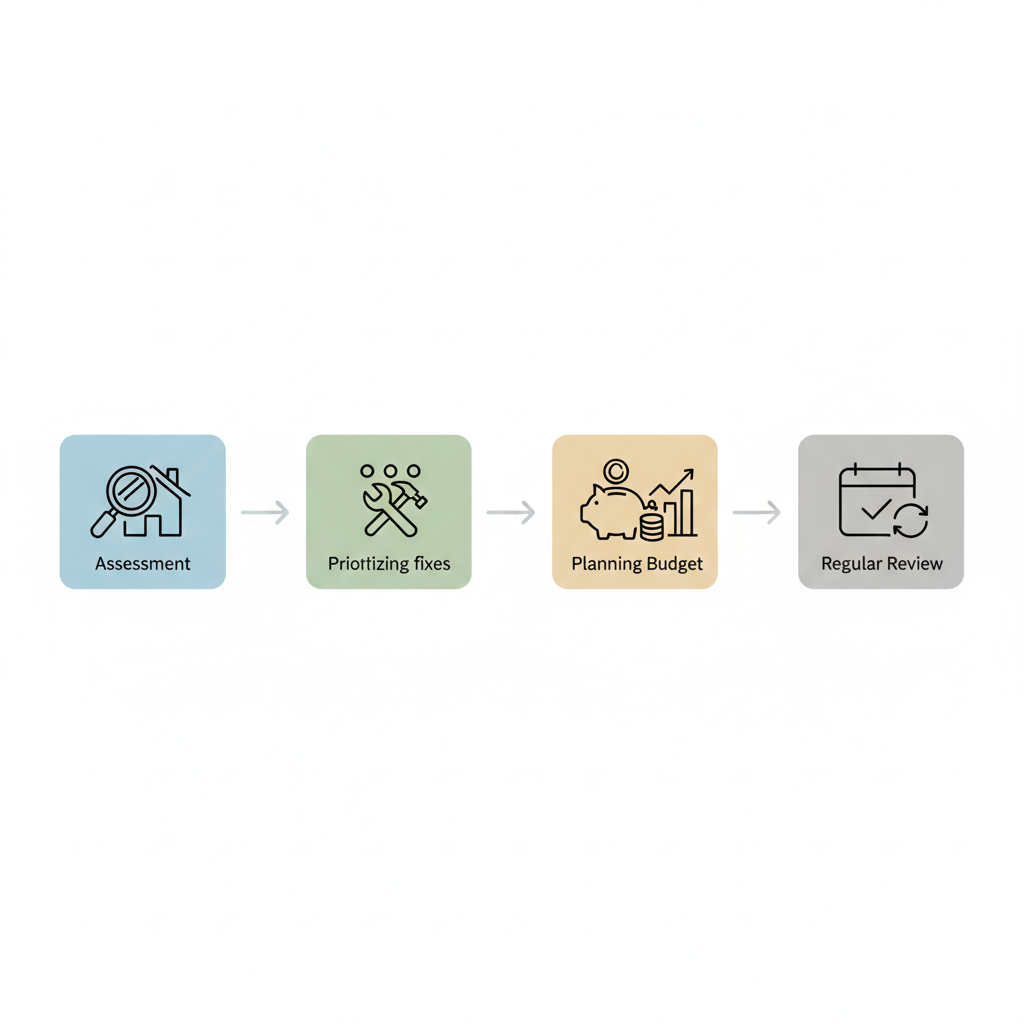
Use this checklist as a monthly review. Mark one small improvement to complete before the next review. Consistency builds a safer home system.
1) Mobility & Movement
- Clear walking routes with predictable surfaces.
- Lighting that supports safe movement day and night.
- Stable support points near transitions (entry, bathroom, stairs).
2) Bathroom Safety
- Slip reduction and stable footing in wet zones.
- Storage layout that avoids bending, stretching, or unstable reaching.
- Entry and transfer movements that feel secure.
3) Daily Living (Kitchen, Laundry, Storage)
- Frequently used items at safe reach height.
- Reduced carrying distance for heavy items.
- Less clutter and fewer sharp turning points.
4) Emergency Readiness
- Emergency contacts saved and printed.
- Address clarity and access for responders.
- Basic plan: who to call, what to do first.
For concept clarity, read What Is Aging in Place?.
Common Low-Cost Improvements
Many readiness upgrades do not require a major renovation. These changes often deliver immediate benefits.
- Lighting upgrades: brighter bulbs, better placement, and night guidance lighting.
- Decluttering routes: especially the night route and entry path.
- Stabilizing floor items: securing rugs and removing loose mats.
- Storage optimization: moving daily items to reachable height zones.
- Simple visual cues: labels, contrast markers, and clear organization.
FAQ
Do I need a renovation to age in place?
Not always. Many risks can be reduced through lighting, layout, storage, and small environmental changes. Renovations are one option when higher-effort barriers exist.
How often should I review readiness?
Monthly is a good rhythm, or whenever health, mobility, or daily routines change.
Is AIP Check a professional assessment tool?
No. AIP Check provides general educational guidance only. For specific situations, consult qualified professionals.
Educational content only. Not medical, legal, or financial advice.
Next Step
If you want immediate action, complete the Home Safety Check and choose one improvement to finish within 7 days.
If you want to understand the core concept, read What Is Aging in Place?.
Common mistakes to avoid
- Waiting for a “big renovation”: small changes now reduce risk immediately.
- Ignoring lighting: poor visibility turns minor obstacles into hazards.
- Over-optimizing style: a beautiful space that increases risk is not readiness.
- Doing everything at once: choose one zone, finish it, then move on.
FAQ
Do I need to be a senior to use this guide?
No. Readiness is useful for adults of any age—especially if you plan to stay in your home long-term.
Is this medical or legal advice?
No. This site provides general educational information only. Consult professionals for specific situations.
What is the best first page to read?
If you are new: What is Aging in Place?
If you want action now: Home Safety Check
Next steps
Readiness improves when it becomes routine. If you revisit this guide monthly and do one small improvement each time, your home becomes safer and easier without a major disruption.
Continue to: Home Safety Check
Next Step
Home safety is one part of aging in place readiness. To better understand your overall situation, continue with the Aging in Place Readiness Guide.
This guide helps you think beyond individual hazards and consider long-term living, mobility, and support needs.