What Is Aging in Place?
Understanding Aging in Place
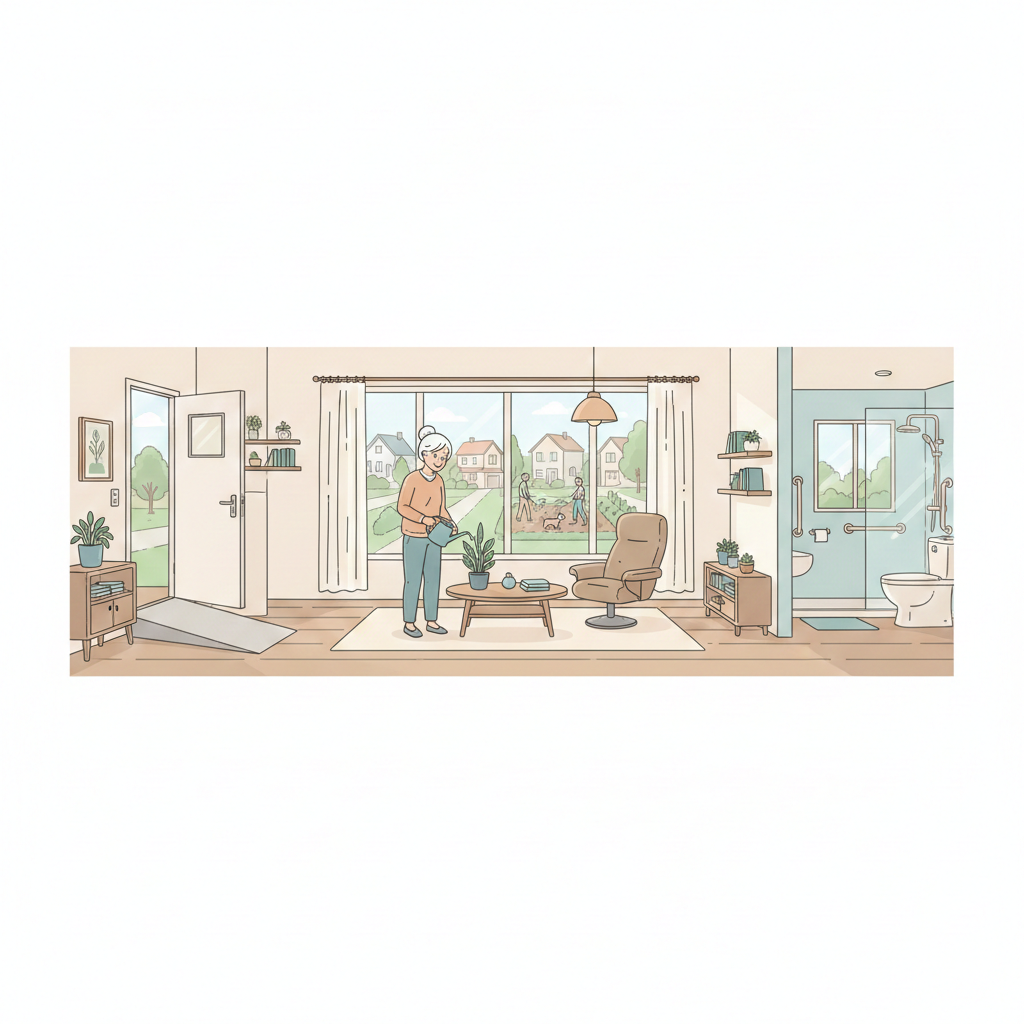
Aging in Place refers to the ability to live safely, independently, and comfortably in one’s own home as they grow older. Rather than moving to institutional care facilities, many individuals prefer to remain in familiar environments that support their physical, emotional, and social well-being.
This concept has gained increasing attention as global populations age and life expectancy rises. Housing that once met daily needs may no longer be suitable without adjustments, especially as mobility, vision, and balance change over time.
Key Factors That Support Aging in Place
Successful aging in place depends on a combination of environmental, physical, and social factors. Home accessibility, safety features, and proximity to essential services all play important roles in determining whether long-term independent living is realistic.
Common considerations include step-free access, adequate lighting, bathroom safety, clear pathways, and ease of movement throughout the home. Small environmental barriers can significantly impact daily independence if they are not addressed early.
Why Planning Ahead Is Important
Aging in place is not only a housing decision, but a long-term planning process. Proactive evaluation allows individuals and families to identify potential risks before they become urgent problems.
Early planning can reduce the likelihood of accidents, minimize stress during health changes, and support informed decision-making about home modifications or alternative living arrangements.
How AIP Check Supports Awareness
AIP Check is designed as an educational resource to help users reflect on their current living environment and understand common factors related to aging in place. It does not replace professional assessments but serves as a starting point for awareness and discussion.
By encouraging thoughtful consideration of housing readiness, AIP Check aims to support better understanding of long-term independent living possibilities.
This content is provided for general informational purposes only and does not constitute medical, legal, or financial advice.
Aging in Place (AIP) means being able to live safely, independently, and comfortably in your own home as you grow older.
Why AIP matters
Many people want to stay in a familiar place: close to routines, neighbors, and daily comfort. AIP is not only about preference—it often affects long-term well-being, stress, and the ability to keep life stable.
The key idea is simple: instead of moving when life becomes harder, you improve the home and habits so daily living remains manageable.
AIP is a system, not a single feature
People sometimes think AIP means “install a grab bar” or “remove steps.” Those changes help, but AIP readiness is broader. A practical AIP system includes:
- Home safety: reducing falls, improving lighting, making movement stable.
- Daily living convenience: easier cooking, laundry, cleaning, and storage.
- Support access: knowing who can help, and how quickly help can arrive.
- Future planning: making changes before they become urgent.
Common barriers that stop AIP
AIP usually fails for practical reasons, not because people lack motivation. These are common barriers:
- Slippery or cluttered walking paths that increase falls.
- Bathrooms without stable support for standing or transfers.
- Stairs or steps without handrails or adequate lighting.
- High-effort daily tasks (carrying heavy loads, repeated reaching, poor storage layout).
- No emergency plan (contacts, address clarity, access for responders).
Practical examples of AIP improvements
AIP improvements range from quick fixes to larger projects. The best approach is to start with the highest impact actions.
Quick wins (often same day)
- Clear the main walking route from bedroom to bathroom.
- Improve lighting in entry, hallway, and bathroom.
- Add non-slip solutions where water is common.
- Move frequent-use items to reachable height.
Medium projects (days to weeks)
- Add handrails or stable support points in key locations.
- Reduce threshold height or fix uneven flooring.
- Adjust storage and furniture to create more space.
Larger projects (planning recommended)
- Bathroom reconfiguration (shower entry, layout changes).
- Entry remodeling (ramps, step changes, door width).
- Major circulation improvements (stair redesign, lift planning).
How to get started
- Learn the concept: you are here—good start.
- Use a checklist: go to Home Safety Check.
- Pick one zone: bathroom or entry is often the best starting point.
- Do one improvement: finish it, then move to the next.
For a structured approach, use the Readiness Guide.
FAQ
Is AIP only about older adults?
No. AIP thinking benefits anyone planning to stay in a home long-term, including families and adults living alone.
Do I need renovations to do AIP?
Not always. Many AIP improvements begin with layout, lighting, storage, and habits. Renovations are one tool, not the only tool.
Can AIP be measured?
It can be evaluated using practical criteria (safety risks, daily effort, emergency readiness). AIP Check is building a structured way to think about that evaluation.
Next steps
If you want action today, use the checklist. If you want a roadmap, use the guide.
Continue to: Home Safety Check · Readiness Guide